
How South Africa's Most Innovative Bank Stopped Innovating Where It Matters
A system-level strategy for re-entering Gen Z and Gen Alpha digital culture — leveraging existing infrastructure while shedding the institutional skin making it invisible to the next generation of account holders.
Executive summary & the implosion risk
This bank's tragedy is specific and avoidable, which makes it worse. Between 2010 and 2018 it was legitimately ahead — the app was best-in-class, the brand felt like it belonged to people building something real. Then it stopped moving. The digital landscape evolved at a pace the bank's internal decision-making architecture could not match, and a brand that once felt like the future began to feel like furniture.
The specific danger
This bank is not losing to competitors on product. It is losing to irrelevance. Challenger banks and digital-first entrants are not winning on features — they are winning on cultural proximity. They feel like they were made for people under 30 because their entire identity was built without accumulated institutional baggage. This bank has better infrastructure, deeper reserves, and a more sophisticated product suite. None of that matters if the 22-year-old opening their first account never considers it as an option because the brand does not exist in any context they inhabit.

Demographics Infographic Panel — South African youth banking cohort
Current institutional logic
Acquisition through product superiority
Better app features, stronger loyalty programme, competitive rates. The assumption: young people will find us when they need us because we are objectively better.
Ground reality
Trust precedes consideration
Gen Z does not evaluate banks on features at point-of-decision. They go with the brand they already trust — and trust is built years before the account is needed. The bank is absent from the trust-building phase entirely.
Current institutional logic
Youth marketing = youth-targeted ads
A social campaign with young faces, trending audio, relatable copy. The assumption: visibility creates affinity.
Ground reality
Presence earns affinity, not visibility
Gen Z and Alpha have finely tuned corporate-intent radar. An ad that tries to sound young reads as a brand in distress. Authentic presence inside digital culture — not broadcasting at it — is the only currency that works.
The bank's strategic advantage over most legacy competitors: it already has digital infrastructure, a mobile-first reputation, and a points-based loyalty ecosystem that, reengineered correctly, is the most powerful tool any South African bank possesses for entering Gen Alpha's digital economy. The assets exist. The strategic intelligence to deploy them in new contexts does not yet.
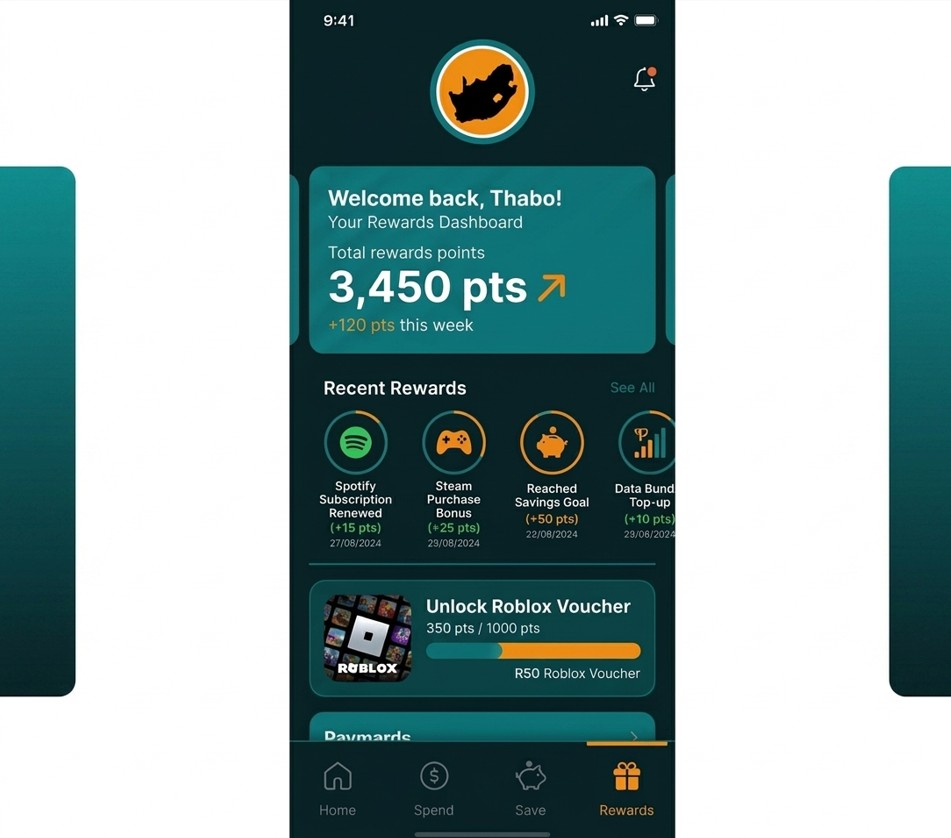
Rewards Dashboard UI Mockup — the fresh way neo-banking interface
The subsurface culture decode — Gen Alpha & Roblox
The first thing to discard: the idea that Roblox is a children's game a bank might sponsor. Roblox is a parallel economic civilisation with its own currency, labour market, creative economy, and social stratification system. Children and young teenagers are not playing in it — they are operating inside it, learning economic logic experientially in a way no financial literacy curriculum has ever achieved.
The economy inside the game
Roblox has over 380 million monthly active users. Its internal currency is purchased with real money and traded within a closed economy mirroring real market dynamics: supply and demand, scarcity pricing, speculation, and liquidity. Top developers earn in excess of $1 million USD annually through the platform's Developer Exchange programme. Gen Alpha is not learning about economies — they are participating in one, daily, from age 8.
The translation layer — digital behaviour → banking behaviour
What Gen Alpha already does
What that actually is
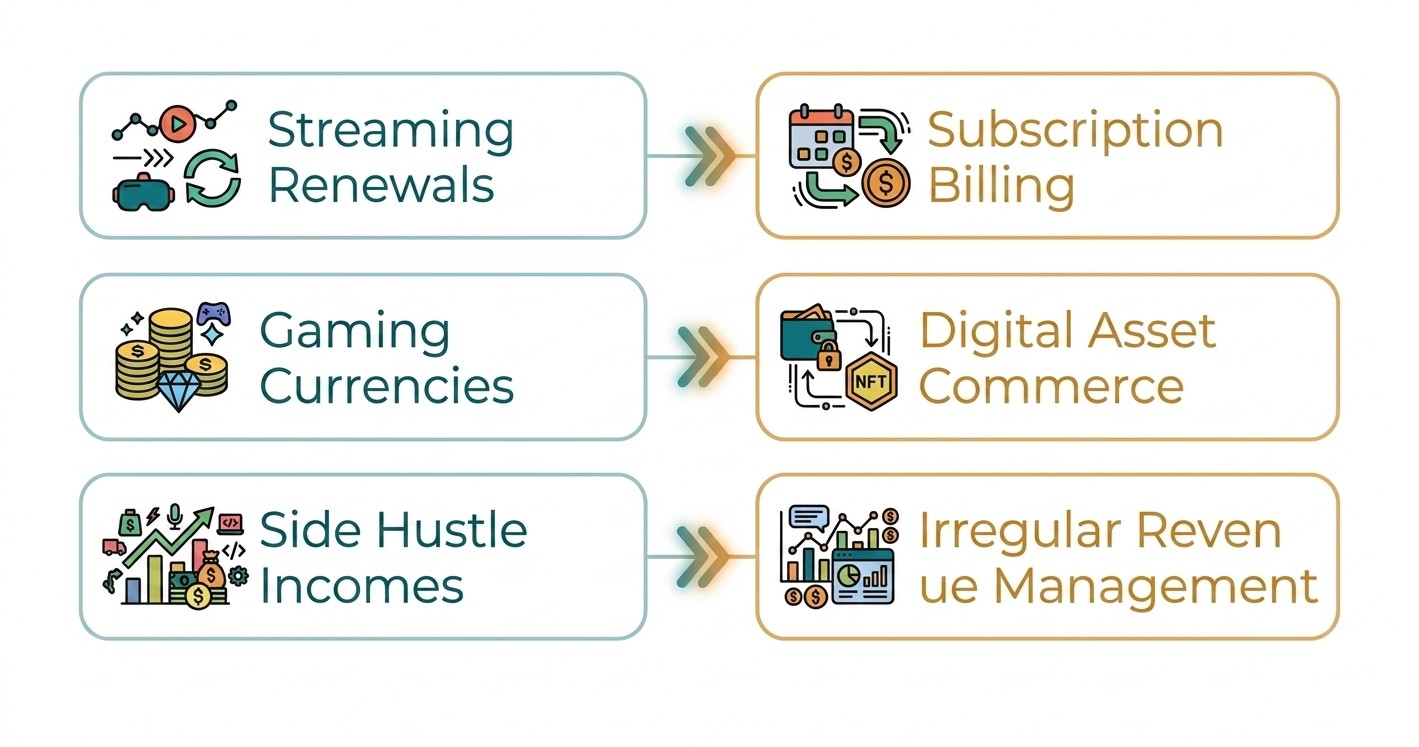
The Translation Layer — digital lifestyle activities mapped to banking behaviours
Insight 1
Spatial identity ownership
Having a world, a base, a custom space is how Gen Alpha signals identity. A brand that builds a world they want to inhabit earns a presence no ad buy can replicate.
Insight 2
Economic fluency without banks
Gen Alpha understands scarcity, saving, investment, and loss through gameplay — often before age 12. The institution of banking is foreign. The job is to bridge this gap, not explain finance from scratch.
Insight 3
Peer-validated trust architecture
Authority flows horizontally. A trusted creator or peer recommendation carries orders of magnitude more weight than institutional endorsement. Trust cannot be bought here.
Gen Alpha experiences digital and physical existence as one continuous reality, not two separate worlds. A bank that exists only in the physical world is not just old-fashioned — it is genuinely incomplete. Like a restaurant that only exists on weekdays.
The loyalty programme — hidden unlock and hidden trap
A well-structured loyalty programme is the most culturally translatable asset available because it already speaks the language of digital reward economies. The trap: most bank rewards programmes reward behaviours Gen Z and Alpha do not have yet — fuel spend, grocery shopping, pharmacy purchases. The loyalty architecture needs rebuilding around the economic behaviours this cohort actually has: streaming subscriptions, data purchasing, digital goods, small irregular income, peer-to-peer transfers. Or the asset is wasted entirely.
Decentralised discovery is the default
Neither Gen Z nor Alpha encounters brands through broadcast media as a primary channel. Discovery happens through Discord servers, TikTok comment sections, YouTube recommendations, gaming communities, and WhatsApp groups. A marketing funnel assuming centralised media no longer maps to how these cohorts find and evaluate anything.
Participation over consumption
These cohorts are not passive media consumers — they co-create, remix, comment, build, and share. A brand that only produces content to be consumed is speaking the wrong dialect. Brands that create infrastructure for participation earn genuine cultural citizenship.
Authenticity is detected, not declared
No brand has ever successfully told Gen Z it was authentic. It is a conclusion reached independently, based on observed behaviour over time. Brands that claim it lose it immediately.
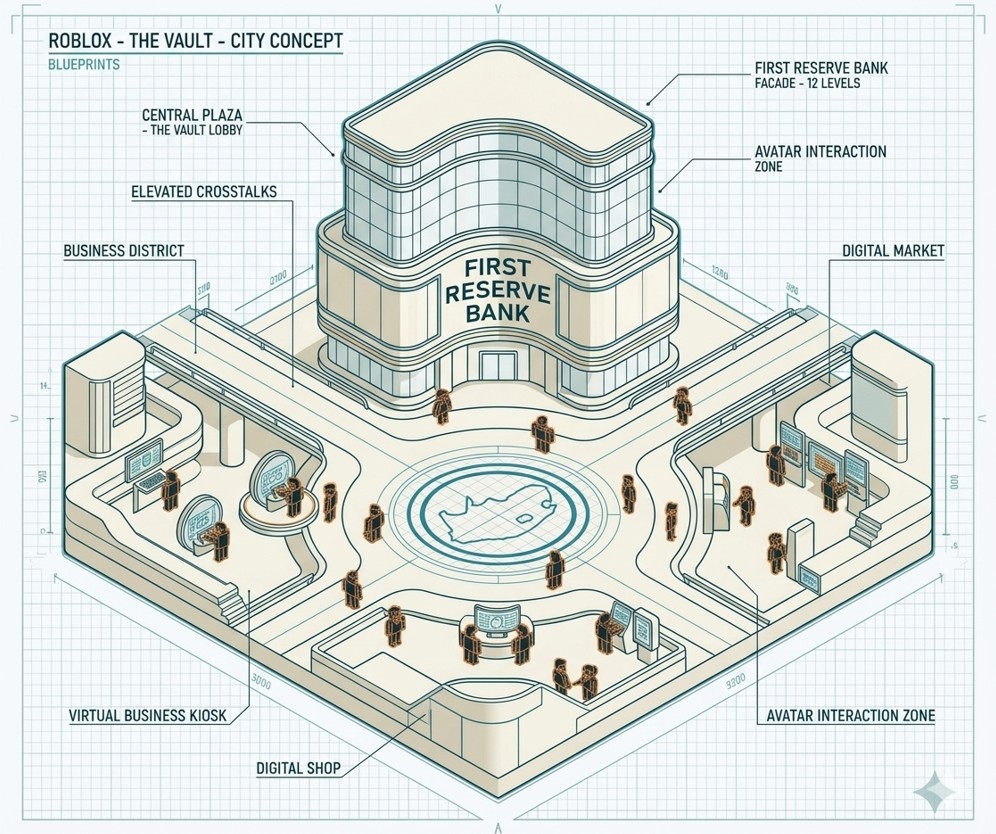
Roblox Vault City Concept Blueprint — virtual ecosystem development framework
The strategic blueprint
The strategic problem is not absence of resource. It is misallocation of existing resource toward a cohort that has already made its bank choice, while the next cohort forms brand impressions in digital spaces that remain completely unaddressed. What follows is a three-track system designed to run simultaneously, each addressing a different layer of the cultural trust gap.
Strategic north star
The bank becomes the first South African institution with a genuine, non-tokenistic presence inside Gen Alpha's digital world. Not as an advertiser, not as a sponsor, but as a builder — a brand that created something they use, something their peers reference, and something that earns the right to exist in their financial lives before they are old enough to open an account independently.
Track 1 — Roblox: "The Vault" economic world
Commission a Roblox-native developer studio to build a persistent world called The Vault — a living city where players earn, trade, invest, build businesses, and navigate economic events. Core mechanics mirror real financial dynamics: variable income, saving buffers, business risk, compound growth on stored assets, and economic downturns that wipe out players who over-leveraged. The bank's presence is architectural. The Vault's central institution is called First Reserve, carrying the bank's design DNA without the corporate wrapper. Players who engage with First Reserve's in-game savings mechanics unlock rewards redeemable outside the game via a linked parent account — creating the first genuine bridge between virtual economic participation and real financial infrastructure. The world is not a tutorial. It is not labelled as education. It is a game that teaches through consequence, not explanation.
Track 2 — Loyalty programme reimagined for the digital-native economy
The existing points programme is structurally brilliant and demographically irrelevant to anyone under 28. The rebuild is not cosmetic. New earning triggers: data top-ups, streaming subscriptions, peer-to-peer send streaks, savings goal completions, first investment contributions, digital marketplace purchases. New redemption pathways: gaming currency, gaming peripheral purchases, digital art collectibles from selected African digital artists, and streaming platform credits. The underlying technology already exists. The category mapping does not. This is a product strategy decision that costs significantly less than a new product build and unlocks an entirely new cohort's loyalty behaviour.
Track 3 — Hustle: creator and community infrastructure programme
Hustle is not a sponsorship programme — it is an infrastructure investment in 10 to 15 African Gen Z creators whose communities are already discussing money, entrepreneurship, digital income, and the economic realities of being young in South Africa. The bank funds production infrastructure, provides financial mentorship through genuine CFPs rather than brand ambassadors reading scripts, and creates a community platform where creators and audiences discuss financial realities honestly. Creators retain full editorial control. The bank's name appears in the supported-by layer. The content is not advertising — it is documentation of real financial journeys, including failures and uncomfortable truths.
Assets this strategy leverages
Existing app infrastructure, loyalty partner network, strong financial backing, established brand recognition, mobile-first reputation, and an existing young account base via entry-level accounts.
Liabilities this strategy must route around
Institutional brand language, branch-centric service assumptions, approval hierarchy that cannot operate at culture speed, loyalty partner set built for older spending patterns, and internal risk aversion around non-traditional channels.
Cross-generational brand messaging arcs
The existing brand language was built around helpful authority: a wise institution extending a hand to someone who needs guidance. That dynamic is the exact posture Gen Z rejects on sight. The required shift is from expert offering help to peer with better tools. The new language is not informal or slang-heavy — it earns trust through precision and honesty, not by approximating youth culture from the outside.
| Context | Current language | Rebuilt language |
|---|---|---|
| Brand position | "How can we help you?" Helpful authority extending downward. | "Built for how you actually make money." |
| Youth account | "Designed for students and young adults starting their financial journey." | "No minimum balance. No branch required. No explanation needed." |
| Loyalty rewards | "Earn points on everyday spending at selected retail partners." | "Every transfer. Every top-up. Every time you save. Points show up when you do." |
| Savings | "Start saving for your future with a competitive interest rate." | "Set a number. Name it something real. Watch it move. We will keep it safe while it does." |
| Investing | "A range of investment solutions for every financial goal and risk appetite." | "Start with whatever you have. R50 is a real start. We will show you what happens next." |
| Trust signal | "South Africa's most innovative bank, recognised for over a decade." | "We have won awards for innovation. We know that means nothing if the app crashes when you need it. We are working on both." |
| Community | "Speak to your nearest adviser about your financial needs." | "Ask anything. The Hustle community has people who have been where you are. We are there too — listening, not selling." |
| Error states | "We apologise for the inconvenience. Please contact customer services." | "Something broke on our end. Here is what happened and here is exactly what we are doing about it." |
Acknowledge the economic terrain honestly
South Africa's youth unemployment sits above 60%. Any communication assuming stable employment, regular income, or parental financial support as a baseline is immediately illegitimate to a significant portion of this audience. The language must work for someone with irregular income, a side hustle, and zero financial safety net.
Specificity is the credibility signal
Aspirational language registers as noise. Specific, concrete, honest communication registers as signal. "Transfer R50 to your savings goal right now and see what it becomes in 12 months at current rates" is more powerful than any motivational framing. Numbers, timeframes, and real outcomes are the trust-building currency.
Admit what does not work yet
Gen Z respects honesty about product limitations more than polished product promises. "We know our loyalty programme does not reward the way you earn yet. Here is what we are changing" earns more trust in one sentence than a year of campaign media.
The 12-month execution timeline
Zero traditional media spend. Every resource allocation targets platform-native infrastructure, product architecture, creator relationships, and community building. Traditional media spend does not reach the target cohort in a trust-building context — it reaches them in an interruption context, which actively degrades brand perception.
The compounding advantage from year 2 onward
Year 2 begins with a Roblox world already seeded with an active community, a loyalty system now rewarding Gen Z earning behaviour, a creator network with institutional trust built over 12 months, and a Discord community generating organic financial conversations. Every subsequent year's maintenance cost is a fraction of Year 1's build cost, while the compounding value of cultural presence, community loyalty, and brand association continues to accumulate. This is not a campaign. It is an asset class.
Capabilities to build or acquire to execute this playbook:
